Out of tragedy, new hope
Presbyterians donated $11 million to the Presbyterian Disaster Assistance (PDA) Program to help Haiti. PDA gave our partner Mouvman Peyizan Papay (MPP) $600,000 to create a resettlement initiative, the EcoVillages, where survivors of the quake built a community of self-sufficient, subsistence farmers.
Our support made a new way of life possible
Located in the Central Plateau of Haiti, 5 miles from Hinche, the nearest city. Despite the hardships that come with subsistence farming, the families of the EcoVillages so far have been safe from the violence and turmoil that has plagued much of the country since the assassination of Haiti’s President.

A shelter in a time of storm
Although they are poor farmers, people of the EcoVillages have provided help to many who have fled violence. Poor people of the EcoVillages, once homeless themselves, have taken in many who are now homeless.
Your support of the school gives hope
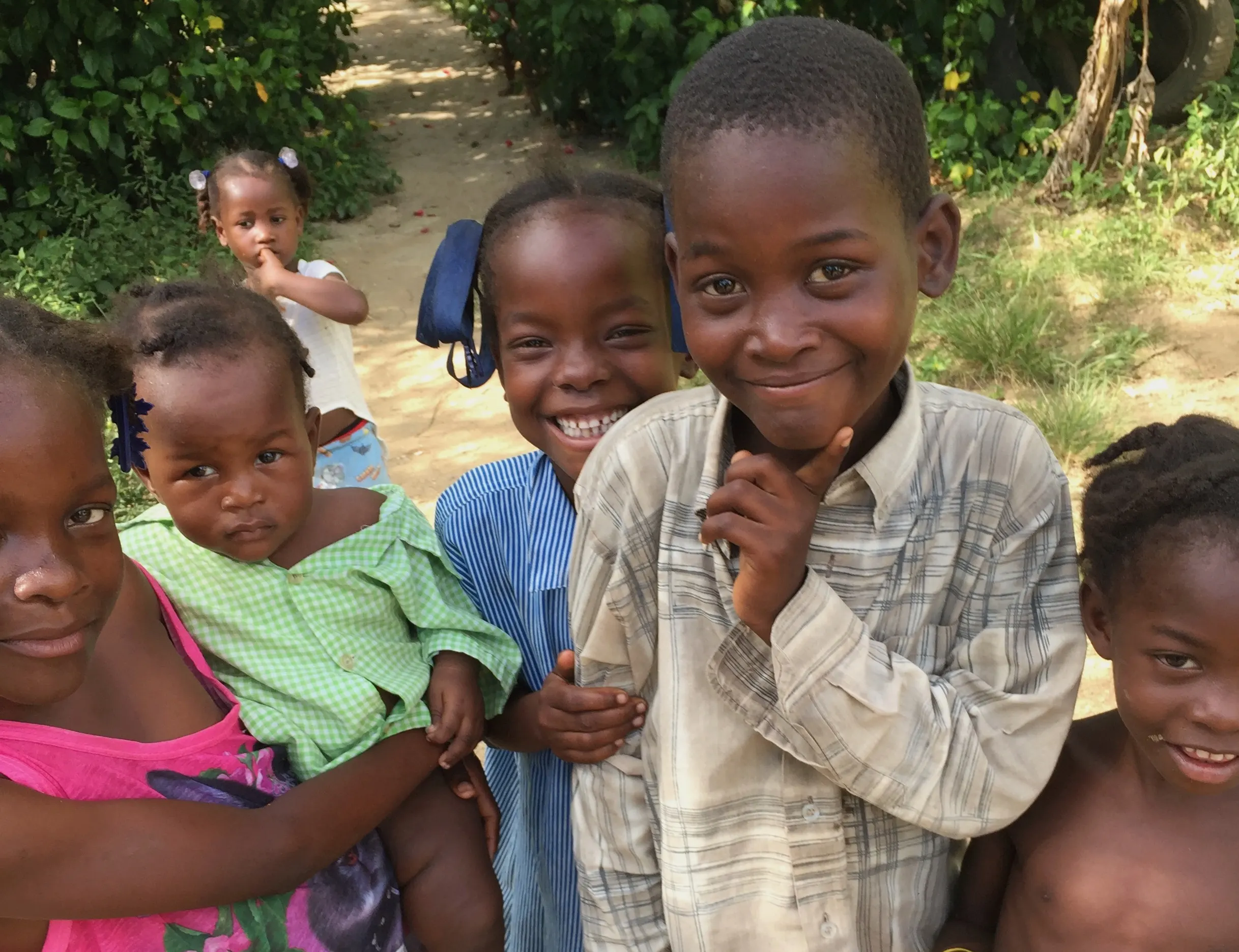
The EcoVillage School has enrolled the children of displaced families. A school built for 300 now has 500 students. The people to whom we have shown compassion and given the hope of education now extend that same compassion and hope to others.
A Girl in the EcoVillage
Produced in 2015 by the Unitarian Universalist Service Committee (Boston). The school has grown since it was filmed, with more students and more classes today, but the story of the EcoVillages still rings true.
Haiti and the bigger picture
Why Haiti?
Haiti is the poorest country in the Western Hemisphere and ranks lowest in the region on the U.N. Human Development Index, a measure of health, education and income (166th of 193 countries in the latest report). Most Haitians live in poverty. According to UNICEF, about one in seven children in Haiti is out of school, as gang violence has forced more than a thousand schools to close. Even in calmer times, public schools have had room for only about a quarter of Haiti's students.
The 2010 earthquake was the deadliest natural disaster in the Western Hemisphere's history: more than 150,000 lives lost, more than a million people left homeless, and billions of dollars in damage. Survivors left the tent cities to find safety for their families and arrived on MPP property.
Haiti was born of the only slave revolt in history to found an independent nation, becoming the second independent country in the Americas — and the U.S. and European powers worked to undermine it from the start. France demanded a huge indemnity as the price of recognizing Haiti's independence, a debt Haiti didn't finish paying off until 1947, and the United States refused to recognize Haiti until 1862. Haiti's struggles today are rooted in that history of slavery and racism.
Today, Haiti is going through one of the hardest periods in its history. Since President Jovenel Moïse was assassinated in 2021, no presidential election has been held and the interim government has been weak. Armed gangs control most of the capital, Port-au-Prince, and have spread into the countryside. Prices keep rising, jobs are scarce, and nearly six million Haitians, about half the country, face severe hunger. Forced removal of thousands of Haitians from the U.S. compounds the already desperate conditions.
Can the school become financially sustainable?
That's our next goal. Because the school is nationally accredited and all its teachers are certified by the Ministry of Education, it qualifies for government funding — the plan from the start. But the government can't meet its obligation to pay teachers, and that's unlikely to change soon. School families live in deep poverty, with nothing left after meeting basic needs.
For now, the school stays open because we fund it. Having built the school and earned national accreditation, the Partnership's next challenge is sustainability.
Why support the school
Every gift provides opportunity to children whose lives have been unfairly harsh. It gives them shelter in a time of storm.